
Precious metals are apparently waking up. And here is where you can find the best deals.


Site:
Precious metals news

Are we about to see new lows for gold and TPTB drive PMs through the floor before the Great Financial Collapse? How Low Could Gold Go???

Gold rose sharply following yesterday’s Fed announcement in which it was indicated that the Fed are unlikely to raise rates in June – although the possibility was not ruled out […]
 Harvey Organ: Fed Turns Dovish, ECB Prepares for GREXIT, Dollar FLASH CRASHES as PMs Surge!
March 18, 2015

The ECB is now preparing for a GREXIT and a loss of 320 billion euros. If you factor in the derivative losses, one can visualize a total meltdown in the […]

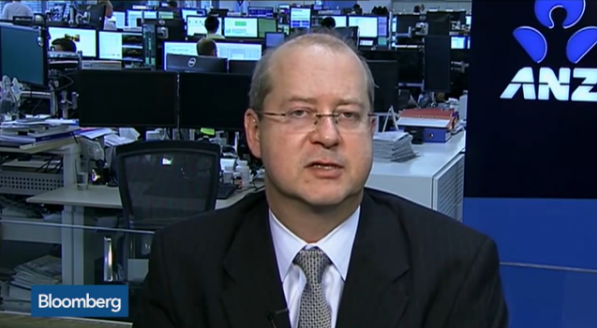
Bloomberg hosted ANZ Chief Economist Warren Hogan to discuss Asian demand for gold. Hogan co-authored a new study showing that gold demand in Asia is poised to rise substantially. As supply constraints lift and incomes in the East rise, consumers in countries like China and India will continue to buy record amounts of gold. More importantly, Hogan believes that China may be stockpiling gold as part of a maneuver to un-peg their currency from the dollar.The first thing we need to understand is that we don't actually get regular reporting on how much gold the PBOC holds. At last count, a few years ago, it was about a thousand tons. We will be due to get an update in the next year or so. China's clearly got a gold strategy as a broad view… Whether or not it's the central bank that is buying the gold or it's in the broader community is not necessarily clear. But the reality is the renminbi moves towards floating and is a major global currency.”
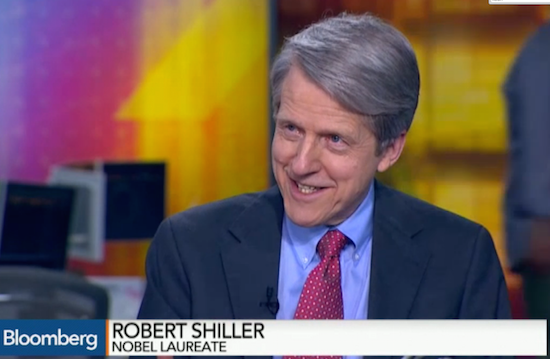
Bloomberg had a roundtable discussion with Nobel Laureate Robert Shiller, author of Irrational Exuberance, about keeping past economic disasters in mind. In particular, they discussed the worry that the stock market is on the verge of another 1937 and a 50% correction. 1937 was the year that the word ‘recession' was invented. Did you know that? … It was invented because Franklin Delano Roosevelt wouldn’t call it a ‘depression’. He thought the psychology was horrible, just horrible."Shiller doesn’t believe harking back to the Great Depression is simply fear mongering, because we live in a “black swan” world. Economic events are unpredictable, and learning from the past is a practical way to prepare for the unknown. Investors might want to step away from the fast-paced world of speculation and take a look at the bigger picture. Last week, we showed that stocks are currently at a peak similar to the one that occurred just before the Great Depression. To analysts li...
The financial media are obsessed with whether or not the Federal Reserve is going to remove the word “patient” from its policy statement concerning an interest rate hike. CNBC asked Peter Schiff for his take, and he told them that the Fed’s statement is meaningless — the Fed can’t raise rates without pushing the United States economy into recession. The host and floor traders insisted that this bubble economy is different, and Peter agreed. This time around, low oil prices aren’t translating into strong consumer spending and the government is in far more debt than the last time it successfully raised rates. He fully expects another round of quantitative easing in the next year.

France, Germany and Italy have confirmed they’ll join China’s new Asian Infrastructure Investment Bank (AIIB). Participation in the rival to the US-led World Bank is seen as a setback for […]

The predictability of the Asia rise/European/NY selloff pattern has become almost comic…

If one addresses what is going on between China and the IMF, while keeping an eye on the Federal Reserve’s fiat debt instrument, incorrectly called the “dollar”, then the likelihood of a […]

Fed states "Unlikely" to raise interest rates in April Gold and silver spiking on initial release... Full FOMC Statement is below:

Has the latest banksters' paper raid re-awoken the Great Chinese Dragon of gold demand? Koos Jansen provides an update on the latest Chinese gold demand numbers below:

The Shadow of Truth hosts Rob Kirby for an incredible discussion about the insidious, omnipresent forces behind what has evolved into continuous, non-stop global financial markets intervention by the Central […]

Debt will increase substantially from here, until a massive reset occurs. Gold and silver, in spite of financial cartel resistance, will assert their real value and be priced much higher, […]

The price of gold is forecast to double in the next 15 years, and growing wealth across Asia, particularly in China and India, will lead to demand for gold bullion […]

The FOMC meeting looms ahead, as the main driver of global gold prices, in the short term. The policy announcement will be made at about 2PM on Wednesday, and most […]

The US Dollar index is going parabolic. Just like in 2008, this is a symptom of a catastrophic underlying systemic problem. I believe that the collapse in the energy sector has triggered […]

Everyone who looks for the truth knows that the U.S. economy is collapsing. If one were to apply the accounting standards used in 1990 to the S&P 500 earnings, one […]
In a long interview with Gordon T. Long, Managing Director of the Lindsey Group Peter Boockvar warns that the Federal Reserve has been creating artificial bubbles for years. In fact, we’re now facing the third bubble in 15 years. The mainstream news claims we’re not in a bubble because “things are different this time.” But Boockvar echoes exactly what Peter Schiff has been saying — of course this bubble looks different. All of the others looked different too until they popped. He also shares some fundamental gold investment advice: watching short-term price movements is useless. Once people stop placing trust in the Fed, gold has the potential to skyrocket in value.
With typical incisiveness, David Stockman laid out for Bloomberg the precariousness of the US economy. The former White House Budget Director called out the Republicans for their failure to do anything about the runaway budget deficit. He expects the government to do what it always does: blink in the eleventh hour when faced with a government shutdown. The Bloomberg host often tries to soften Stockman’s statements, but Stockman picks the issues right back up and paints a sobering picture of American economic instability.
Dr. Joseph Salerno, Academic Vice President at the Mises Institute, spoke with Power Trading Radio about the declining value of fiat currencies and the Federal Reserve's incentive to depreciate the dollar. The interview is long, but Salerno's comments are a good primer on how precious metals became — and remain — sound money. He also discusses the growing consensus on both sides of the aisle that the Fed needs to be audited. In fact, he believes we’ll see a full audit of the Fed within 5 years.