
Precious metals are apparently waking up. And here is where you can find the best deals.


Site:
Precious metals news
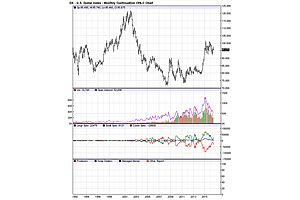
To adequately answer the title question of this article would indubitably demand the voluminous attention of 10 PhD dissertations. The reason being that there are an uncountable number of factors that fuel and guide the greenback’s path. Here are merely a few of these mind-boggling complex factors:

Prior to the 2008 crash, central banks set interest rates according to what their crystal ball told them the future would be like. They were supposed to raise them when they thought the economy was growing too fast and cut them when they thought it was growing too slow.


Lately, there’s so much gold stockpiled by governments and investors, someone should pitch a new reality TV show called Gold Hoarders. But rather than poor agoraphobics maddeningly piling up old newspapers and canned food, the show would feature smart individuals like Bill Gross who have the foresight to see the writing on the wall. The message is simple, “Look out for a collapsed dollar and low-yielding assets.”Bill Gross is all straight talk when it comes to his preference for precious metals investment. “I don’t like bonds; I don’t like most stocks; I don’t like private equity,” the Janus Capital portfolio manager told investors this week.What’s his reasoning? It’s pretty straightforward. Central banking policy has eliminated a healthy, open market atmosphere where high-yield opportunities are no longer readily available.

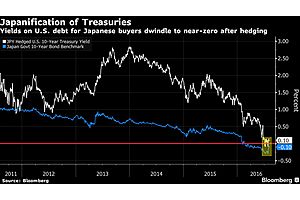
With everyone from Jeffrey Gundlach to Bill Gross warning of a bubble in bonds, it could ultimately upend the record foreign demand for Treasuries...
Aug 8, 2016 - 14:21:18 PDT
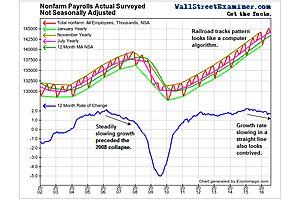
The US economy may well be spawning big numbers of crappy low paying jobs. Withholding tax collections were huge in the last 4 weeks of July. We know that that didn’t come from big wage gains by existing workers. They’re running at…Read on →

The US government should not operate like a bank or a hedge fund, loading up on short-term debt to fund long-term projects. With net US government debt already running at 82% of national income, the fiscal costs of a fast upward shift in interest rates could be massive.

China is desperate to solve several problems it has with its debt to GDP ratio north of 300 percent.

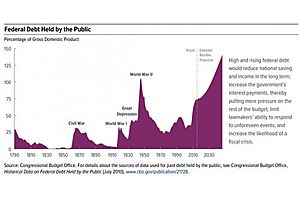
Fiscal stimulus is already in the cards as CBO is projecting uninterrupted deficits for the next decade, totaling an additional $9.4t in debt & warns these “reflect the significant long-term budgetary challenges facing the nation.”
 Why this Job Market is Still Terrible: The Politically Incorrect Numbers Everyone is Hushing up
Aug 8, 2016 - 12:26:33 PDT
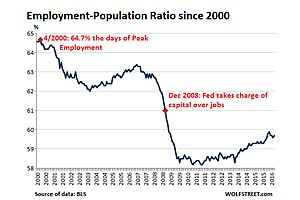
In fact, it has barely improved since the Great Recession.

“The growth model China has relied on for the last 30 years – one predicated on low-cost exports to the rest of the world and investment in resource-intensive heavy manufacturing – is unlikely to serve it well in the next 30 years.”


Chinese customs authorities reported on Monday a weaker than expected trade performance, with a further decline both in exports a& imports pointing to weakness in global demand and economic outlook.

Interest rates. Stimulus. With boring repetition we see the same worn out and failed responses to the deflationary pressures the world is facing.

An interesting economic experiment is underway in Japan—and its results will hold lessons for the rest of us

In a recent interview, former U.S. Federal Reserve Chairman Alan Greenspan (the "Maestro") warned that the economy was experiencing, "the early signs of stagflation." This is a very rare occasion where ...

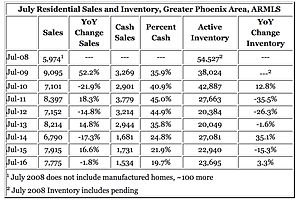
This is a key housing market to follow since Phoenix saw a large bubble / bust followed by strong investor buying.
99

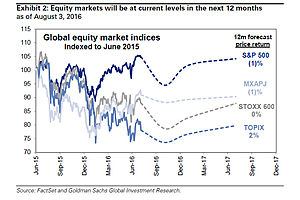
Several heavyweights are lining up to tear this bull to bits as the S&P continues to nibble away at uncharted territory.
 Social Security faces a $32 trillion shortfall that will cut your benefit
Aug 8, 2016 - 10:06:54 PDT
Under the infinite horizon, Social Security will have $32.1 trillion in unfunded liabilities by 2090, $6.3 trillion more than last year's projection.


Smoke and Mirrors...


Economist John Williams thinks the global economy is weak, and a black swan could hit anytime & take it all down.

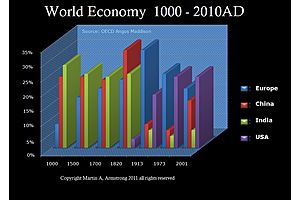
Even at the start of the United States, we will see that Thomas Jefferson and John Adams both shared that view that true wealth was created by the rural farm life.