
Precious metals are apparently waking up. And here is where you can find the best deals.


Site:
Precious metals news

In his latest podcast, Peter Schiff lays out why optimism for the US dollar in 2017 is just wishful thinking. Trump’s tax cuts and increased spending are likely to create only a fraction of the stimulus most people expect, given the budget deficits and national debt we face. Investor hopes also reside with Trump’s tax plan to include an import tax that would correct US trade deficits with China. However, taxing imported goods will only drive up the cost of consumer goods, negate any increase in consumer spending, and diminish the purchasing power of the dollar. Peter explains:“When the cost of importing goes up, it’s not like Americans are just going to switch from buying goods made in China to goods make in America. No, they’re just going to have to pay more to buy the goods made in China. If they don’t have the extra money, they just won’t buy as much. So, what’s going to happen as a result of increasing the cost of importing is that consumers will spend less and the bubble ...
Silver prices are near the end of their correction and will rally substantially higher. Why? Exponential increases in debt and total currency in circulation lift the prices for nearly everything,

Gold futures finish higher after a volatile start to 2017, with prices settling at their highest level since mid-December.

Between 2000 and 2008, two of the largest financial bubbles in history — in technology stocks and housing, respectively — suffered spectacular collapses.
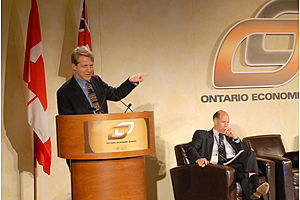
Interest rates have risen, but historically they’re still low. There isn’t any received wisdom about just exactly why they are so low. It’s natural to put it on to the financial crisis of 2007/08. That’s because it’s a dominant narrative that everything today must be due to the financial crisis.
In his various writings, Murray Rothbard argued that in a free market economy that operates on a gold standard the creation of credit that is not fully backed up by gold (fractional-reserve banking) sets in motion the menace of the boom-bust cycle.

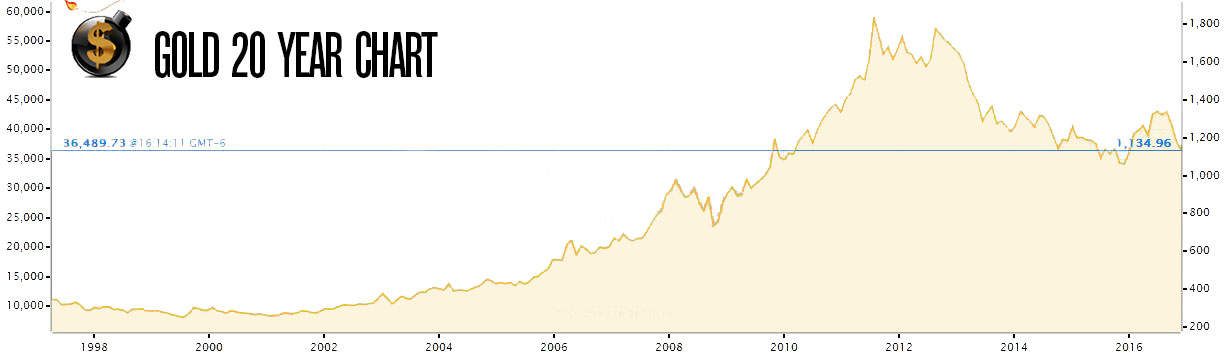
It is possible that the economic and military trends that have been set in play via Shemitah and Jubilee will sustain themselves a while longer before total collapse. But eventually […]

Jim Rickards reveals where the Fed's policy is heading. Hint: It has to do with helicopters. Read on for a full explanation...

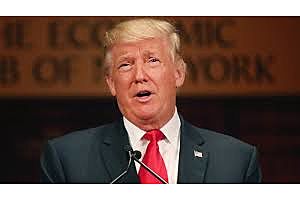
U.S. unilateralism under Donald Trump, China’s growing assertiveness and a weakened German Chancellor Angela Merkel will make 2017 the “most volatile” year for political risk since World War II, according to Eurasia Group.

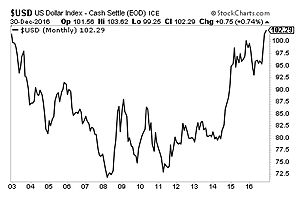
What is Janet Yellen thinking? The Yellen Fed raised interest rates again in December 2016. More than this, Yellen has promised the Fed will be raising rates THREE times in 2017. This is astounding when you consider that the Fed is promising this at a time when the $USD is at a 13-year high. Janet
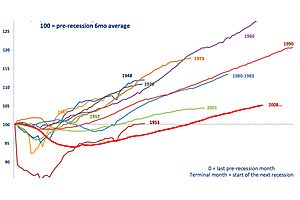
Today's employment figures represent the worst recovery from a recession on record (for any terminal point of previous recoveries, current recovery is associated with lower employment levels).

Those decrying the loss of centralized control and narratives are in essence decrying solutions to the new problems we face. Just as the Catholic Church could not turn back the clock to 500 A.D., so the central states and banks cannot turn back the clock to 1945.

Today, the US is in a box and Trump comes on the scene with nowhere to move. Too much debt can only be managed if interest rates are kept low. Everybody and his mother around the world is dumping US Treasuries.

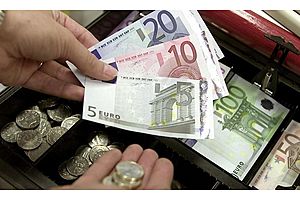
Government hopes two-year social experiment will cut red tape, reduce poverty and boost employment


Property prices have climbed to dangerous levels in several advanced economies, raising the risk of massive price falls if markets overheat, according to the Organisation for Economic Co-operation and Development (OECD).

With the yuan weakening and a property bubble at home, money will continue to leak offshore.
As tumultuous as last year was from a global political perspective on the back of a rocky start market-wise, 2017 will be much more so. The central bank subsidization of the financial system (especially in the US and Europe) that began with the Fed invoking zero interest rate policy in 2008, gave way to international distrust of the enabling status quo that unfolded in different ways across the planet. My prognosis is for more destabilization, financially and politically.
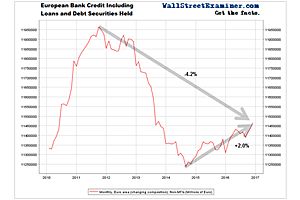
Has Not Revived Borrowing In Debt-Saturated Europe
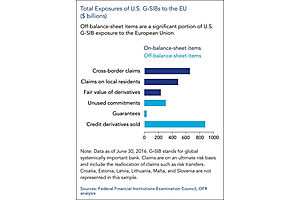
At a time when international business headlines are filled with reports of a massive banking bailout in Italy and the potential for systemic risks from Germany’s struggling giant, Deutsche Bank, the OFR report delivers this chilling statement: