
Precious metals are apparently waking up. And here is where you can find the best deals.


Site:
Precious metals news

US Treasury Secretary Steve "The Munchkin" Mnuchin said on Bloomberg News today that Treasury is still considering issuing ultra-long sovereign debt. This comes on the news that Argentina is issuing a 100 year sovereign bond that is in hot demand. Reuters -- Argentina sold $2.75 billion of a hotly demanded 100-year bond in U.S. dollars…
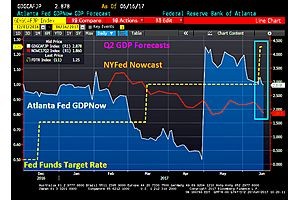
and 2.9% (Atlanta Fed GDPNow). Today is a day of little economic news (other than serial bond defaulter Argentina seeing strong demand for its new 100 year sovereign bond issue).

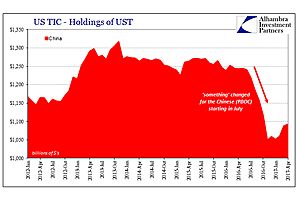
I have to believe all three of these factors are related: China hiding “outflows”, Japan reversing redistributions, and banks caught between renewed “dollar” devastation


Don’t think that the economic & financial effects will be limited to the UK. The U.S. markets will also be heavily impacted by the ongoing drama.


As you can see below, it is silver that is causing grief to our bankers:


Deflationary competitive pressures could have become more important for the overall trend in prices than the so-called Phillips Curve relationship, which links inflation to the state of the labor market.
.png?g=1497401206230)
The Market Event Junior Gold Mining Investors Can’t Afford to Ignore:

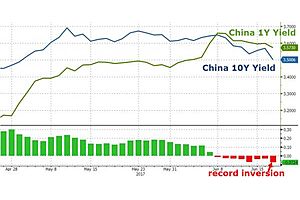
as yields have fallen, the curve has collapsed to its most inverted ever... flashing warning signals for growth as loud as they have ever been.
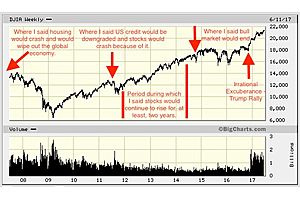
Since central banks can create infinite amounts of fiat money out of thin air, their new path of buying stocks directly in order to shore up entire markets means they can pretty much prop the market up until economic wreckage in the general economy is so bad

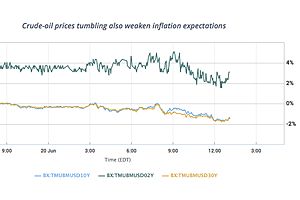
U.S. Treasury yields trade lower on Tuesday as a pair of Federal Reserve officials emphasize the central bank’s gradual approach to lifting interest rates, while acknowledging concerns about sluggish inflation, if not a lackluster economy.

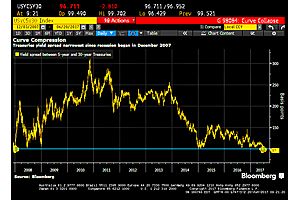
It looks like The Fed’s massive stimulus has finally worn off for the Treasury curve.

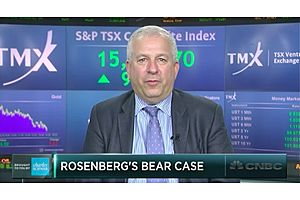
Stocks may be trading at historical highs, but the tables may be about to turn, economist David Rosenberg says.
We’re not suggesting that Deloitte didn’t do its job properly but we are suggesting that the Fed benefited by not having a bunch of different prying eyes looking at its books during those bizarre years when its assets ballooned from $914.8 billion at the end of 2007 to $4.5 trillion in 2014.
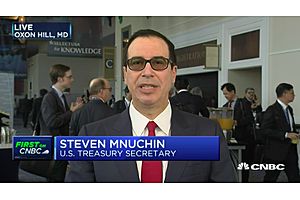
In an interview with CNBC, Mnuchin said the issue is his "No. 1 focus."

We should start looking at the decline in oil prices as a proxy for the Fed’s inability to continue its rate hike train.
in January by Bankrate found that nearly 60% of Americans wouldn’t have enough savings to pay for a $500 expense if it came up unexpectedly.

were criminally charged on Tuesday over agreements the bank struck with Qatar as it sought to avoid a government bailout during the 2008 global financial crisis.

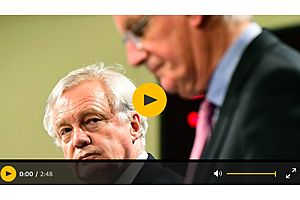
“It’s not how it starts, it’s how it finishes that matters,” Davis said in Brussels after the first day of formal talks. “Nothing is agreed until everything is agreed.”
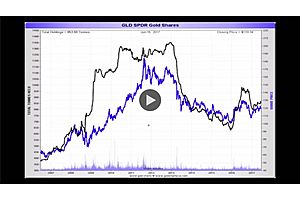
Mike examines evidence of manipulation in the silver market and the potential for silver to break out. Including a look at the Commitments of Traders Report and the activity of biggest metal ETFs and their impact on supply and price.

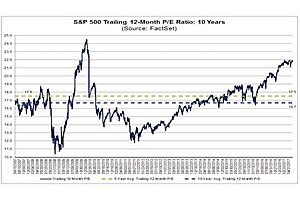
Stocks continue to trade at nosebleed valuations. According to Fact Set, the S&P 500 is currently trading at a P/E of 21. This is well above its 10-year average of 16.7. And bear in mind, eight of those ten years (from 2010-2017) were when stocks were