
Precious metals are apparently waking up. And here is where you can find the best deals.


Site:
Precious metals news

Keith Weiner presents a divergence from the standard gold and silver only approach

On November 8, 2016, India quietly shocked the world with an abrupt cash ban of the 500 and 1000 rupee notes. Things have now gone from bad to worse.

One thing is clear: These aren’t your daddy’s markets anymore.Why? Because about 10 years ago the Rise of the Machines (aka high frequency trading algorithms) completely altered the terrain of what we call the ‘capital markets.’

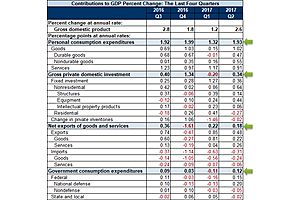
Here is a look at the contribution changes over the past four quarters. The difference between the two rightmost columns was addressed in the BEA's GDP summary quoted above.

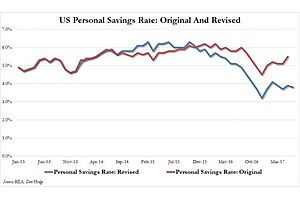
personal saving rate was revised sharply lower as a result of the ongoing downward historical adjustment to personal income and upward adjustment to spending, to only 3.8%.

Simon Black's advice on caution is timely in a week of highs, forks, splits and dips

The miners are hanging in there so far, but here's what to look for


Americans' living standards aren't nearly as good as they like to think they are.
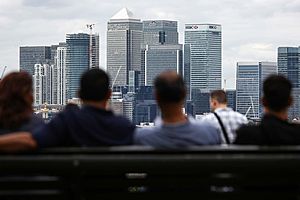
Banks may need to find $30 billion to $50 billion of additional capital to support new European units in the aftermath of a hard Brexit, and some smaller firms may abandon their operations on the continent altogether as profitability plunges, according to Oliver Wyman Inc.
Australia’s dollar is now a key stumbling block to the economy emerging as a competitive services-driven exporter, prompting Reserve Bank Governor Philip Lowe to warn on the implications of extending its surge.

Here's the latest market reaction to today's hard fork in Bitcoin Plus a guide to the "For" and "Against" sides.
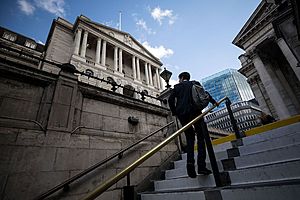
The flurry of excitement about a Bank of England rate hike is now looking a bit overcooked.

On Tuesday, the People's Bank of China (PBOC) set the yuan midpoint at 6.7148 per dollar, the strongest level since Oct. 11.
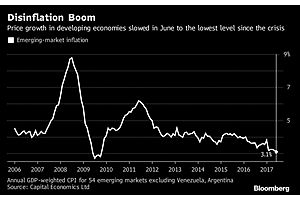
Emerging-Market inflation the lowest since the depths of the financial crisis
 First Precious Metals Weakness, Then Home Sales Slowing, and Now Auto Sales Are Crashing
August 1, 2017

Here's the Latest News on yet Another Sector Slump

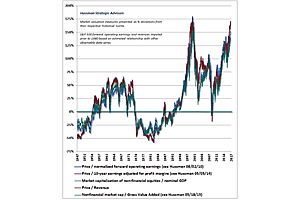
With the median stock at the most extreme price/revenue ratio in history, & a outcome now being market loss of -60%


Over 99% of investors continue to live in delusion. That delusion is that stocks are NOT in a bubble. They are. In fact, it’s arguably about to become the biggest stock bubble in history. According to John Hussman, stocks have been more expensive based on median valuations only ONCE before in history. That was the


Credit-card losses are rising as more consumers fall behind on their bills, ending a six-year long streak of declining write-offs for card issuers.
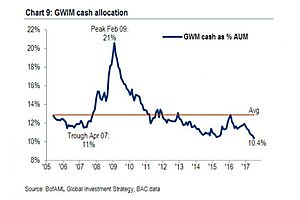
As for those 45% of Millennials planning to take on "much more risk" at the all time highs in the S&P, good luck.


There are lots of stocks that are lower, & significantly lower than they were at the highs. So, it's not an all-clear signal."