
Precious metals are apparently waking up. And here is where you can find the best deals.


Site:
Precious metals news

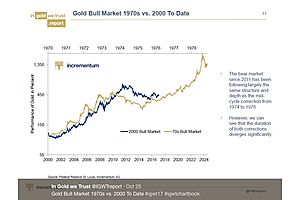
The Bear market since 2011 has been following largely the same structure & depth as the mid-cycle correction from 1974 to 1976
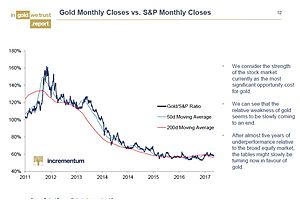
We can see that the relative weakness of gold seems to be slowly coming to an end
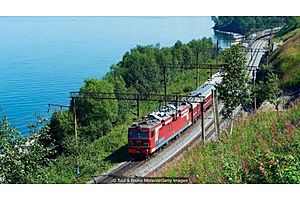
One hundred years ago, the Bolsheviks captured the entirety of Tsar Nicholas II’s family gold reserve – or so they thought.

The apparent "myth" of the Fed's proposed "balance sheet reduction" program as the most recent analysis shows a $13.5 billion

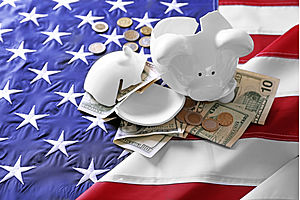
The U.S. budget deficit reaches a satanic number... Could the U.S. actually owe $210 trillion?... Brian Maher has more...
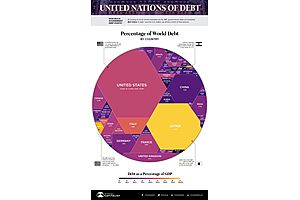
If you add up all the money that national governments have borrowed, it tallies to a hefty $63 trillion.
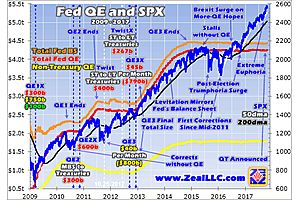
With CBs aggressively curtailing easy-money liquidity, this stock bull is in serious trouble.

The SchiffGold Friday Gold Wrap podcast combines a succinct summary of the week’s precious metals news coupled with thoughtful analysis. You can subscribe to the podcast on iTunes.

One day, a kid and his dad were walking along the shore of Battery Park in New York City. Looking out across the water, the kid spies the Statue of Liberty in the distance."Hey dad," the kid says, tugging on his father's arm with one hand, pointing at the statue with the other. "Is that Nancy Pelosi?"OK. I made that up. But the British apparently have a problem with identification that isn't a lot different than that silly little scenario.

Central bank quantitative easing is a little like a zombie. It dies - but it never really dies.There's been a lot of focus on the Federal Reserve raising interest rates and unwinding its balance sheet. Sometimes it's easy to forget the Fed isn't the only game in town. While most people consider QE dead and buried in the US, it remains alive and kicking in other parts of the world.Yesterday, the European Central Bank (ECB) announced it would extend its bond-buying program deep into 2018, continuing the flow of easy money into the European Union. ECB President Mario Draghi said the central bank would cut its bond purchases in half beginning in January, a faint hint at eventual normalization. But the central bank president left the door open to backtracking.

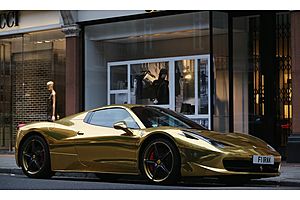
Not since the time of the Carnegies, Rockefellers and Vanderbilts at the turn of the 20th century was so much owned by so few

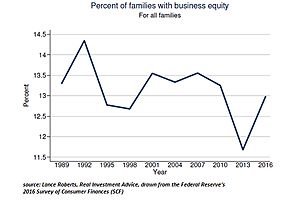
The number of families with business equity has been declining, eroded by recession and stagnation, despite the recent bounce higher.

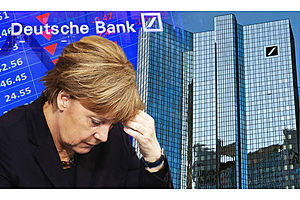
The "terrible" 9.6 per cent drop year on year was blamed on a weak market, low interest rates and the bank’s ongoing restructuring programme.

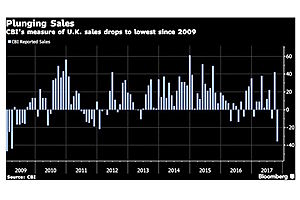
Additional cracks are starting to appear in the global economy. In the UK, retail sales plunged the most in eight years. Consumers also becoming worried about falling house prices. I propose consumers should have been worried home prices did not tank long ago.


There are a lot of them. It’s called “crisis” for a reason.

At this point, does anyone believe the Fed is willing to do anything that might really spook markets?

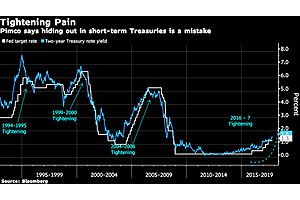
Investors looking to slide down the Treasury yield curve to reduce risk as the Federal Reserve tightens policy may be in for a uncomfortable ride.

John Taylor, the Stanford economist and proponent of a rule bearing his name, might push the Fed into a different direction.
Watch leading economic indicators and have a bear market plan in place just in case.


Carley Garner says the complacency in this market is unprecedented, and this month is on target to be the least volatile month for equity markets in modern history.