
Precious metals are apparently waking up. And here is where you can find the best deals.


Site:
Precious metals news
 Gold Prices Head Higher as Investors Bet on Continued Central Bank Stimulus
Jun 8, 2020 - 10:11:53 PDT

Gold prices on Monday rose off a two-month low as investors wagered that stimulus from central banks will remain in place for the foreseeable future, bolstering the case for bullion, despite some strength in the U.S. stock market
 Why the US Dollar Price of Gold Has Stalled Temporarily on the Way Up to an All Time Record High
Jun 8, 2020 - 10:08:23 PDT

Now more than ever, investors desperately need to know what really influences the dollar price of gold. This is the case given the unprecedented falsification of asset prices and debt monetization taking place today. G


February 2020 marks the end of the expansion that began in June 2009 and the beginning of a recession.

As the U.S. tries to lift its economy out of the worst slump in modern history, a looming round of spending and job cuts at state and local governments threatens to drag it back in. That happened after the last recession, too. Now the numbers look even worse.

As the Fed continues to shrink its daily POMO, which this week averages just $4.5 BN per day, dealers have to find other means to extract liquidity, and as a result they are increasingly turning to repo.


The May jobs “shocker” was largely a reflection of CARES coverage of corporate payrolls. The gap between Wall Street and Main Street appears similar to the “incubation phase” of other major downturns.

Uncle Sam has added $1.2 trillion to the budget deficit over the last two months, according to the latest numbers Monday that detail how the government has used cash to try to combat the coronavirus pandemic and its economic catastrophe.
Jun 8, 2020 - 08:09:24 PDT

The coronavirus pandemic and containment measures have plunged the global economy into deep contraction. World Bank Global Economic Prospects forecasts say global economy will shrink 5.2% this year, using market exchange rate weights; deepest recession since WW II.


We keep hearing from the Fed's defenders that the current spate of new stimulus and bailouts from the central bank are really not a big deal and are all very prudent and moderate. I asked Senior Fellow Bob Murphy to provide some much needed perspective.
 China Could Force Trump And The Fed To Destroy The U.S. Banking System: Forbes
Jun 8, 2020 - 08:01:01 PDT

China is poised to launch a digital version of its yuan and could be about to create serious problems for the U.S. banking system—potentially forcing the U.S. to digitalize the dollar to compete.

The S&P 500 is now trading at its highest multiple since mid-2001. Traders Craig Johnson and Chad Morganlander discuss whether this is cause for concern.
 Democrats Unveil Police Reform Bill After Nationwide Protests Against Brutality
Jun 8, 2020 - 07:54:37 PDT

The Democratic bill aims to both deter police brutality and hold officers more accountable for their abuses.

While a majority of stimulus payments are out the door, millions of Americans are still waiting for their money. Here's the latest on who is affected and what you can do to make sure you're on the government's radar.


Former FDIC chief Sheila Bair pointed out the mutual exclusivity between stimulating the economy and promoting. equality, something that Fed Chair Jay Powell argued against.

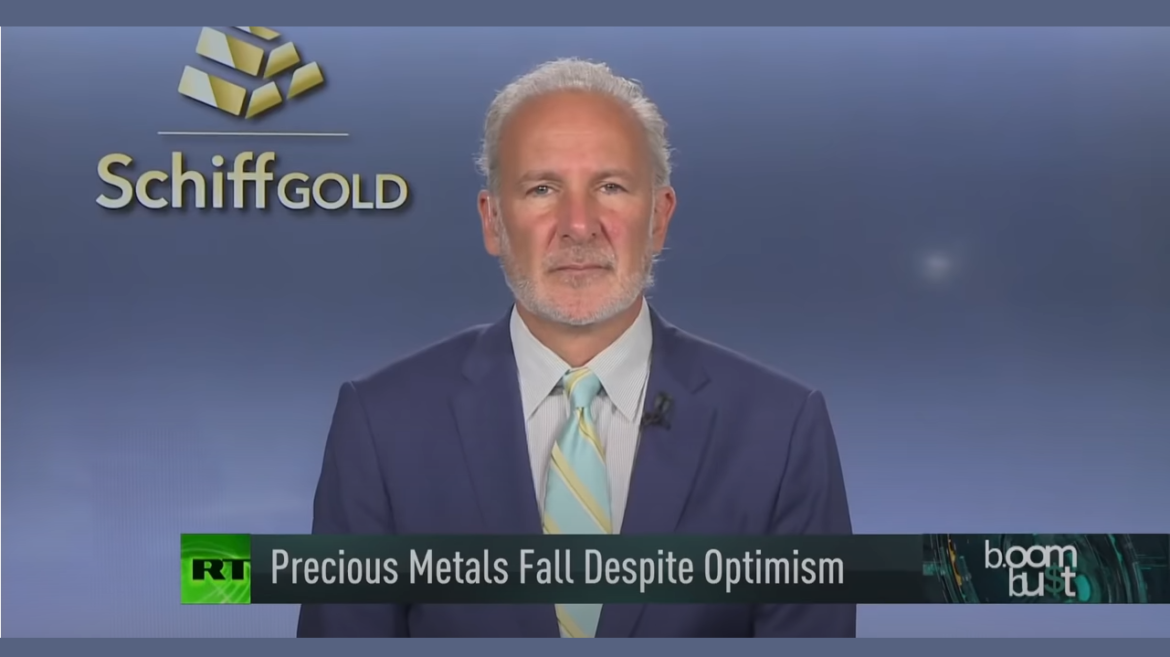
Last week, Peter Schiff appeared on RT Boom Bust to talk about precious metals and the state of the economy. He said not only are the economic dynamics bullish for gold, but silver is also poised to break records.
The markets were giddy Friday after a much better than expected jobs report boosted optimism for a quick v-shaped recovery as the economy opens back up. But in his podcast Friday, Peter Schiff poured some cold water on this notion. He said given the amount of stimulus that the Federal Reserve and the US government have pumped into the economy, unwinding it all will be mission impossible.
Druckenmiller Says He’s Been ‘Humbled’ by Market Comeback, Underestimated the FedJun 8, 2020 - 05:46:41 PDT

Stanley Druckenmiller said the market’s strong performance over the last three weeks has “humbled” him and that he underestimated the power of the Fed.
El Erian: I’m ‘Uncomfortable’ Betting on Continued ‘Huge Recovery’ in the Stock MarketJun 8, 2020 - 05:44:15 PDT

The Allianz chief economic advisor, who in early March correctly called a coronavirus-driven bear market, told CNBC he's reluctant to buy the recent reopening rally.


What’s so insidious about the Fed’s bailouts of investors in hedge funds, mortgage-REITS, stocks, bonds, leveraged loans, and other often risky assets? The destruction of capitalism.


To stimulate the economy in the past decade with interest rates pinned near zero, the Federal Reserve made promises about how long they would remain low.